

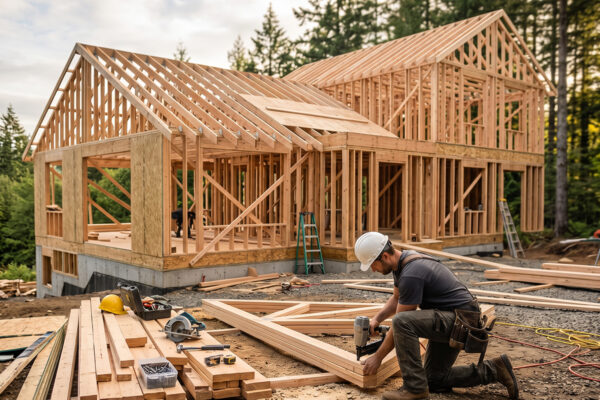
Many homeowners assume that staying on budget means giving something up. In reality, the most effective cost savings come from making smarter decisions, not cutting corners.
In custom homebuilding, small design choices can have a big impact on your overall investment. The trick is knowing where to adjust without affecting the look, feel, or long-term value of your home.
At JayMarc Homes, this is part of a broader value engineering approach built into our design process, aligning design, materials, and construction decisions with your budget from the very start.
What Are Smart Substitutions in Custom Home Design?
A smart substitution isn’t a downgrade. It’s a strategic adjustment that preserves design intent while improving cost efficiency.
Instead of asking what can be removed, ask how the same outcome can be achieved in a more efficient way.
These decisions often happen (and should happen) during the design and preconstruction phases, where changes are easier, more cost-effective, and fully aligned with your overall vision. If a builder waits to address smart substitutions until farther into the process, it may be reactive to external pressures like timeline delays and limited finish options, and homeowners may feel like they are making sacrifices instead of optimizations.
Why Smart Substitutions Matter
Design drives cost. Every material, dimension, and detail influences labor, fabrication, and installation.
Without guidance, it’s easy to:
- Overspend in areas that don’t add any meaningful value
- Miss opportunities to simplify construction
- Make late changes that add extra cost and delay timelines
Often, a few early design decisions can affect tens of thousands of dollars in your custom home’s total project cost because they influence multiple phases of construction.
This is why thoughtful planning and early decisions are crucial for protecting your budget and timeline. When everything is aligned from the beginning, you have control over both the outcome and the experience.
At JayMarc Homes, smart design choices aren’t about reducing quality; they are about directing investment where it has the most impact, a principle reinforced throughout the design-build process.
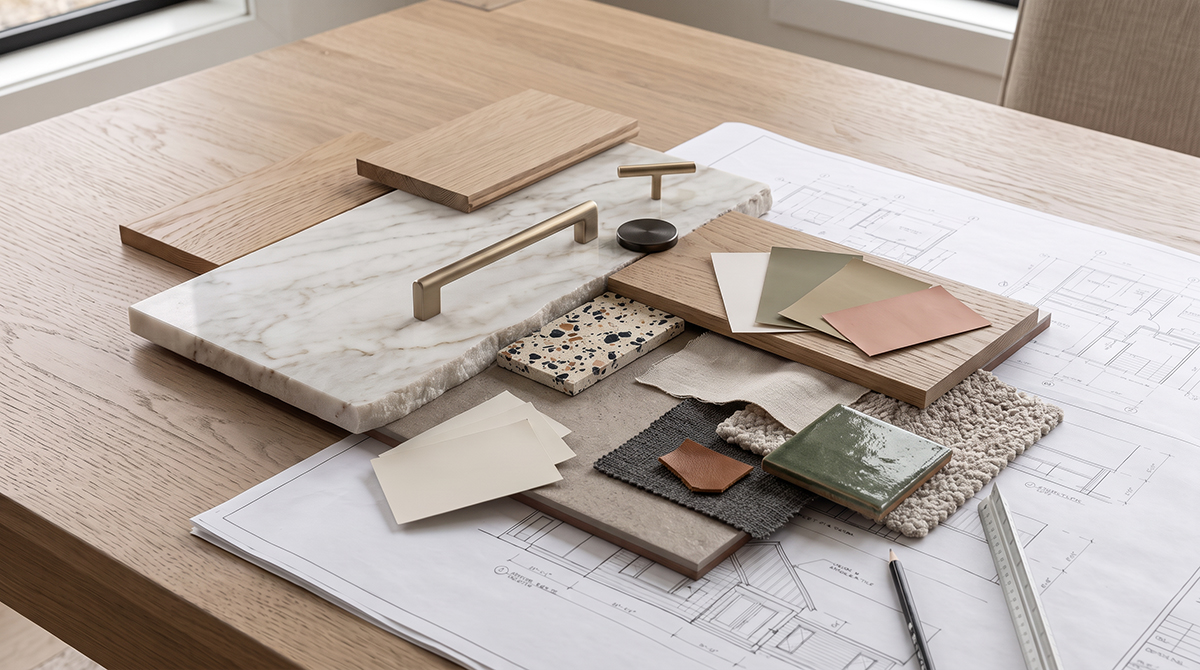
5 Smart Design Substitutions That Preserve Style and Save Money
In custom home design, it’s not about doing less. It’s about making the right choices in the right places. These five smart substitutions highlight where a small change can deliver the intended visual impact while reducing unnecessary costs.
1. Custom Doors and Windows vs. Standard Sizes in Thoughtful Layouts
Large, custom-sized doors and windows can significantly increase costs due to fabrication, lead times, and installation complexity.
The Smart Swap:
Use standard window and door sizes arranged in creative groupings to achieve the same visual impact.
Why It Works:
You maintain natural light, symmetry, and architectural interest while avoiding the added fee of custom manufacturing. Strategic layouts can provide a clean, cohesive look while keeping costs within budget.
2. Complex Rooflines and Foundations vs. Simplified Architectural Forms
Multiple rooflines, pitches, and intersections increase framing complexity, labor time, and long-term maintenance. The same applies to overly complex foundation designs, especially on challenging lots with irregularities or slopes that may need extra excavation or structural support.
The Smart Swap:
Simplify the roof structure and foundation design while maintaining strong architectural character through materials and proportions.
Why It Works:
Cleaner rooflines and a more efficient structure reduce framing time, minimize engineering demands, and limit site work such as excavation and retaining systems. By simplifying both the roof and foundation, you can lower the cost across multiple phases of construction.
Simplify structural complexity and focus instead on strong design fundamentals. This is one of the most effective ways to control cost because it influences everything from site preparation to framing and long-term performance.
3. Full Custom Millwork vs. Strategic Built-Ins
Fully custom cabinetry and millwork throughout the entire home can quickly escalate costs without adding proportional value.
The Smart Swap:
Prioritize custom millwork in high-impact areas like the kitchen, great room, or primary suite, and use more cost-effective solutions in secondary spaces and lower-traffic areas.
Why It Works:
You focus your investment where it’s most visible and most used. Secondary areas still feel cohesive, but without overspending on details that don’t significantly impact daily living. This approach aligns with a value-first mindset, where customization is intentional rather than applied everywhere without prioritization.
4. Natural Stone Everywhere vs. Targeted Material Use
Using premium materials like natural stone across multiple surfaces can significantly increase material and labor costs.
The Smart Swap:
Use high-end materials as focal points, and complement them with quality alternatives in secondary spaces.
Why It Works:
You preserve the visual impact and luxury feel while controlling overall material spend and installation complexity. Strategic material placement creates contrast and emphasis that enhances the design rather than detracting from it, and in many cases, less coverage often makes a stronger statement.
5. Structural Changes vs. Finish-Level Adjustments
Modifying layouts, expanding spaces and square footage, or making structural changes can quickly affect engineering, permitting, and construction costs.
The Smart Swap:
You can achieve the same feel or visual impact through finishes, lighting, ceiling details, or layout optimization within the existing footprint.
Why It Works:
Structural decisions are some of the most expensive changes you can make. Keeping the structure efficient while enhancing design through finishes delivers better cost control while reducing the risk of delays. This supports a smoother construction process, since mid-build structural changes are one of the most common causes of cost increases and timeline disruptions.
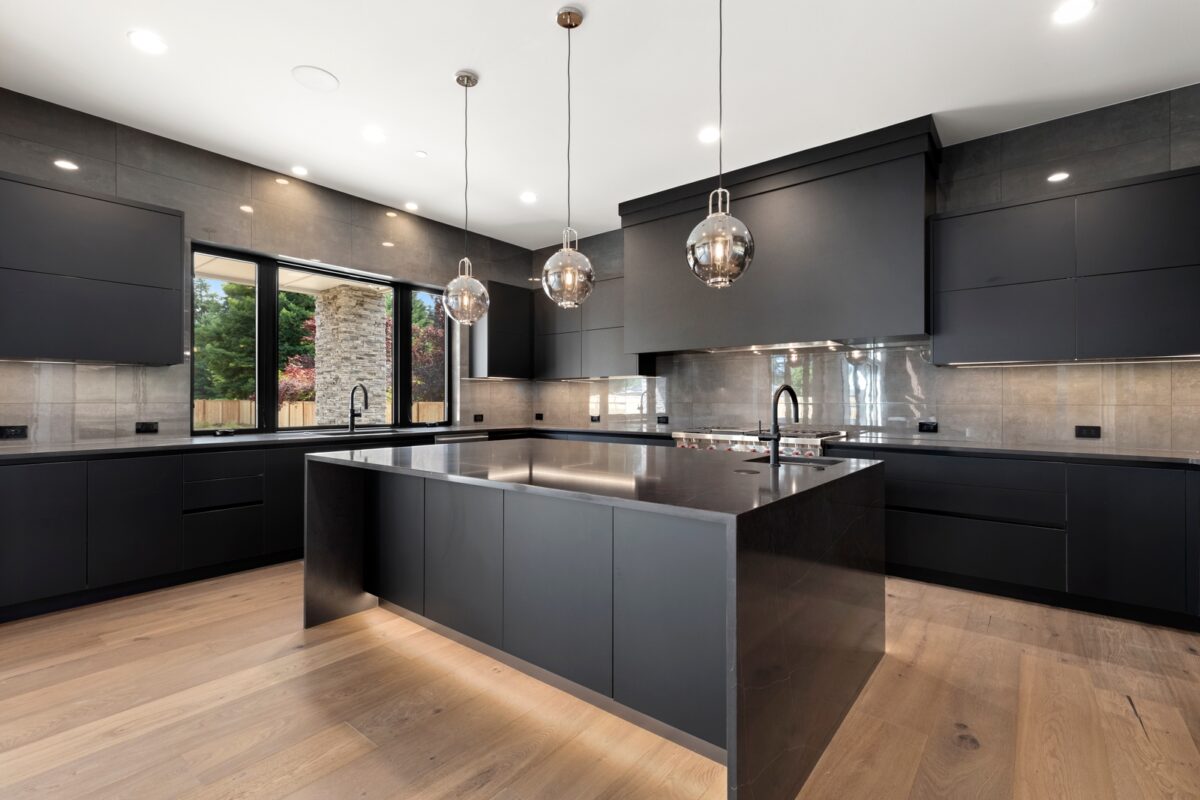
When Substitutions Should Be Made (And Why Timing Matters)
When smart substitution conversations don’t happen with your builder in the beginning, you risk running into issues mid-build. Once construction has started, the structure is set, and the only option is to remove features or reduce finish materials in an effort to reduce rising costs.
Late changes often compromise the homeowner’s overall design, leading to regret later and creating spaces that feel mismatched or inconsistent. Smart substitutions take a different approach. They focus on aligning design decisions from the beginning, rather than reducing quality after the fact.
The best time to make decisions about smart substitutions is during preconstruction, before plans are finalized and construction begins. Late changes often lead to change orders, rework, and delays, and increased labor and material costs.
The most costly adjustments aren’t about what was chosen, but when the decision was made. In fact, many of the delays and budget overruns in custom homebuilding are tied to decisions that were made too late rather than the decisions themselves. When details are finalized early, the entire build is smoother and more predictable.
How JayMarc Helps You Make Cost-Smart Design Choices
At JayMarc Homes, smart substitutions are built into the process, not added as an afterthought.
During preconstruction, our team:
- Aligns design decisions with real-time cost data
- Provides value engineering options that preserve your vision
- Guides you through selections with priorities, aesthetics, and budget in mind
- Finalizes decisions early to avoid mid-build changes
This integrated design-build approach allows you to make informed decisions with clarity and confidence. The goal is to direct your investment where it matters most.
When done correctly, smart substitutions:
- Protect your budget and the build schedule
- Maintain design integrity
- Reduce unnecessary complexity
- Improve long-term value
Start Your Custom Home Journey With Confidence
Every custom home involves hundreds of decisions. The difference between a stressful experience and a successful one often comes down to guidance.
With a proven design-build process and a team that prioritizes planning, JayMarc Homes helps you make informed, strategic choices from the very beginning, so your home reflects your vision without unexpected costs or compromises.
Schedule your consultation today and start your custom home journey with clarity and confidence.
Start Your JourneyFAQS About Smart Substitutions in Custom Home Design
Smart substitutions are strategic design choices that reduce cost without changing the overall look, feel, or function of your home. Instead of removing features, they focus on achieving the same outcome in a more efficient way.
Not when done correctly! Smart substitutions are about smarter spending, not downgrading quality. The goal is to maintain quality and design integrity while avoiding unnecessary cost in low-impact areas that don’t add long-term value.
Smart substitutions tend to have the most impact in areas like:
-Structural design decisions like rooflines, foundations, and layout complexity
-Window sizing and placement
-Material selection and distribution
-Millwork and built-ins
Small adjustments in these areas can save thousands of dollars without changing the overall design.
The best time to make smart substitution decisions is during preconstruction and design. Early decisions are more flexible and cost-effective, while changes made during construction often lead to added costs, timeline delays, or change orders.
That’s where an experienced design-build team is important. A builder like JayMarc Homes evaluates each decision based on cost, visibility, functionality, and long-term impact to help you determine where your investment matters most.
They’re similar; however, value engineering is the broader process of aligning design and budget, and smart substitutions are one of the strategies used to achieve that balance.
Yes! When smart substitutions are applied early, they help align your design with real-world costs, reducing the likelihood of budget surprises or the need for late-stage compromises.
Generally, no. In fact, when done strategically, smart substitutions preserve or even add value by focusing investment on high-impact areas that buyers care more about, while avoiding overspending on less visible features.
Yes! Structural integrity, core systems (HVAC, plumbing, electrical), and high-use areas like kitchens should always be prioritized. The goal is not to cut costs everywhere, but to spend intentionally.
JayMarc integrates cost analysis, design expertise, and real-time budgeting throughout the preconstruction process. This allows clients to see the impact of each decision and make adjustments early, before construction begins.