

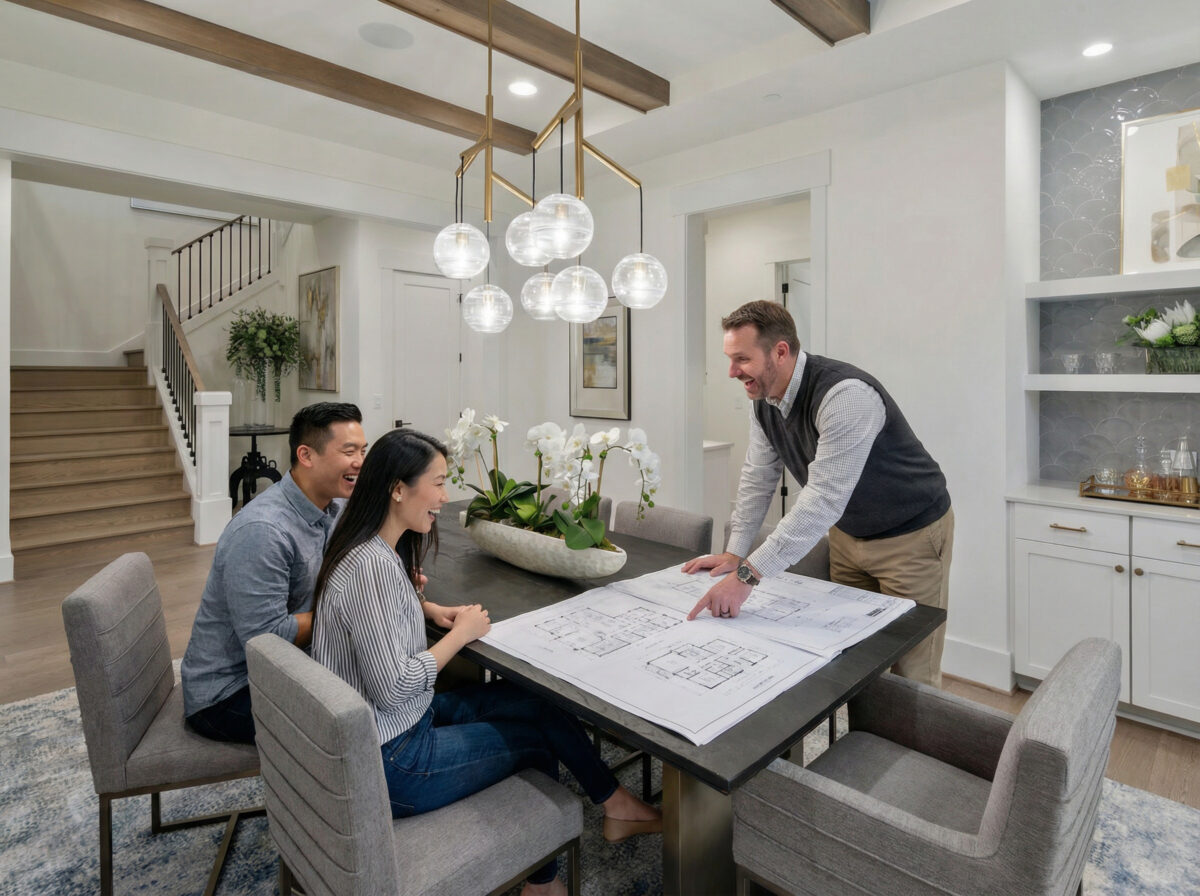

Value engineering in custom homebuilding is a structured, collaborative planning process that evaluates design, materials, and systems to optimize cost without sacrificing quality, performance, or essential functionality. At its best, it maximizes your investment by aligning your vision with your budget.
Unfortunately, the term often gets misunderstood. Many homeowners hear “value engineering” and assume it means cutting corners or downgrading. That’s not how we approach it at JayMarc Custom Homes.
We don’t want to strip away style to save money. It’s about replacing materials or products with less expensive options while retaining the intended aesthetic. It’s about protecting the look, feel, and livability of your home while being intentional about where every dollar goes.
When done properly, value engineering doesn’t take away from your home; it reduces mid-build stress, preserves design integrity without inflating costs, and improves long-term performance.
Value ENgineering is Not Cost CUtting
Value engineering gets a bad reputation because it’s often introduced too late.
In many projects, “value engineering” is presented after construction pricing comes in higher than expected. By then, plans are finalized, permits may be submitted, and expectations are emotionally set. The only remaining option is reactive cost cutting, like removing features, shrinking rooms, or downgrading finishes.
That experience feels disappointing because it is disappointing.
True value engineering is proactive value planning. It happens during feasibility and design, while ideas are still flexible. Instead of asking, “What do we need to remove?” the question becomes, “How can we achieve the same outcome more efficiently?”
When value planning is built into the process at the beginning, it is strategic and empowering. Tacking it on later makes it feel like you’re being forced to make an unexpected compromise.
What Value Engineering Really Means in Custom Homebuilding
At its core, value engineering aligns four critical elements:
- Design
- Budget
- Performance
- Lifestyle
It looks beyond surface finishes and asks deeper questions, like:
Will this material hold up long-term?
Does this system improve comfort and energy efficiency?
Is this layout structurally efficient?
Will this decision increase maintenance costs five years from now?
For example, selecting slightly less expensive tile may save money upfront, but simplifying a complex roofline could save significantly more without impacting the feel of the home. Choosing the right trade partner can also influence long-term performance. Some trades specialize in systems that improve energy efficiency, durability, or installation precision which can reduce maintenance and future repair costs.
True value engineering considers both cost and longevity. A decision that saves money today but creates replacement costs later isn’t real value. Strategic planning balances your immediate budget with long-term livability. And the earlier this process happens, the more effective it is.
When Value Engineering Should Happen (And When It’s Too Late)
Value engineering works best during:
- Feasibility
- Architectural Design
- Preconstruction
This is when flexibility still exists.
Once permits are submitted or construction has started, changes become more expensive and more disruptive. Last-minute or late adjustments can trigger change orders, permit revisions, material reorders, and scheduling delays.
At JayMarc Custom Homes, value engineering is integrated into our Discovery, Design, and Define phases. Homeowners shouldn’t have to request it. It’s already part of how we plan.
Some costs have a much larger impact on your overall budget than others. Architectural strategies to create value add up faster than tile choices. Structural efficiency, layout simplification, window alignment, and square footage decisions protect more budget than minor finish swaps.
Value engineering isn’t a one-time action. It’s keeping the target budget top of mind throughout the entire planning process and weighing each decision using current, accurate information to make informed choices.
Smart Value Engineering Examples That Preserve Design Intent
Value engineering is easier to understand when you see it in action. The goal is never to remove what makes your home feel custom and personal. It’s to make decisions that protect both design and budget.
Here are a few examples of how strategic value engineering preserves your vision while improving efficiency.
Structural & Layout Decisions That Save Without Sacrifice
The biggest opportunities for meaningful savings often happen in areas homeowners never see.
Simplifying rooflines reduces framing complexity, labor hours, and material waste. Designing efficient structural spans can eliminate unnecessary beams or posts. Aligning walls and windows between floors can reduce engineering requirements.
Right-sizing square footage is another powerful tool. Instead of trimming finishes to fit the budget, adjusting the footprint slightly may protect both budget and design integrity. For example, utilizing standard window and door sizes in creative configurations can significantly reduce fabrication costs without altering the aesthetic.
These decisions rarely change how the home feels, but they make a measurable impact on cost efficiency.
Material Choices That Balance Cost and Longevity
Not every surface needs to be premium. But some absolutely should be.
Strategic value engineering asks where durability is most important. Exterior materials, structural components, and high-use surfaces deserve investment because they affect maintenance and long-term value. In other areas, smart alternatives can deliver equal performance without the extra expense.
It’s not about choosing cheaper materials. It’s about choosing wisely by evaluating maintenance cycles, wear patterns, and lifecycle cost so your home performs beautifully over time.
Systems & Performance Decisions
Mechanical systems are another area where value planning matters. Oversizing HVAC systems, overcomplicating technology, or layering unnecessary upgrades can increase cost without improving comfort. On the other hand, underinvesting in insulation or mechanical design may reduce the upfront cost but increase monthly expenses and reduce livability in the long run.
Strategic value engineering right-sizes systems based on how you actually live. It balances energy efficiency, performance, and practicality so your home feels comfortable and efficient rather than overbuilt or underperforming.
Poor Value Engineering vs. Strategic Value Engineering
disappear. Rooms shrink. Excitement turns into hesitation. Instead of bringing your vision to life, you feel like you’re losing it.
That’s poor value planning.
Strategic value engineering is different. It guides decisions early so that painful compromises aren’t necessary. Instead of taking things away, it shapes the design from the beginning.
The outcomes look very different:
Poor value engineering often leads to:
- Regret
- Mid-build changes
- Budget frustration
- Design compromises
Strategic value engineering leads to:
- Confident decisions
- Predictable budgets
- Fewer surprises
- A home that still feels like your dream
The difference isn’t whether value engineering happens. It’s when and how it’s applied.
How Value Engineering Supports Budget Clarity, Not Budget Shock
Budget clarity comes from defining expectations early. Unclear allowances often create false affordability. If selection budgets don’t match your actual preferences, upgrade creep becomes inevitable. And when upgrades happen late, they create financial and emotional stress.
Early evaluation avoids this cycle. As design decisions are made, estimates are updated with real numbers. That transparency allows homeowners to make informed adjustments before anything is locked in.
Value engineering works hand-in-hand with disciplined budgeting. It ensures your design, selections, and structural decisions match your financial goals from the start.
How JayMarc Homes Approaches Value Engineering
At JayMarc Custom Homes, value engineering isn’t used as a corrective step. It’s embedded in our design-build model.
Because our architects, designers, purchasing team, and construction professionals work together from day one, decisions are made with real-time cost insight. We evaluate feasibility, update budgets throughout design, and conduct trade partner bidding before construction begins.
Our background as a spec builder sharpened this skill. In spec building, maximizing value was essential to delivering the strongest return without sacrificing quality or design integrity. Those same strategies now benefit our custom clients.
Our goal is simple: get the biggest bang for your buck, intentionally.
Why Value Engineering Builds Trust, Not Tension
As a homeowner, you don’t want constant tradeoffs. You want confidence.
You want clarity about what your decisions mean. You want to understand the impact of choices before you commit, and to feel empowered, not surprised.
When value engineering is proactive, it builds trust. It replaces tension with transparency. It allows you to move forward knowing your design, budget, and long-term investment are aligned.
Clarity builds confidence. And confidence makes the building experience better.
Start Your Custom Home Journey with Confidence
If you’re considering building a custom home, the best time to protect your vision and your investment is before construction begins.
Schedule a consultation with JayMarc Custom Homes to learn how strategic value engineering can protect your design, your budget, and your overall building experience.
Common questions about value engineering in custom homes
Not when done strategically and from the start. It protects performance and longevity while optimizing cost.
No. It means clearer information about the impact of your options so decisions feel intentional.
Yes. When materials, systems, and structural strategies are evaluated for lifecycle performance, long-term value often improves.
Your architect, designer, builder, trade partners, and you. The most effective value planning happens collaboratively, with your goals acting as a guide for every decision.