

Article updated October 9, 2026
Planning a custom home build on Seattle’s Eastside? While your building timeline may seem straightforward, there may be some surprises along the way. This article is designed to help you understand how timelines are created and anticipate everything that could cause a potential delay to help keep your project on track.
Unlike production homes, where pre-selected sites, designs, and features streamline the building process, custom homes are a unique journey shaped by the land, the design, and the decisions you make along the way.
Custom homes require starting from scratch, with every detail being a reflection of the homeowner’s preferences and choices.
“Building a custom home is all about precision and personal expression. Unlike production homes with fixed floor plans, every custom home begins as a blank slate, shaped entirely around how you want to live,” said Samantha Jordan, Purchasing Manager.
JayMarc Homes has guided families through this process across Seattle’s Eastside for more than 15 years, building custom homes in Bellevue, Kirkland, Mercer Island, Issaquah, Redmond, Sammamish, Medina, Woodinville, and Renton. The timeline varies by project, but the experience of building in these communities consistently shapes how that timeline unfolds.
In this article, we break down the custom home building timeline in detail, including the factors that extend it, the specific considerations that apply to building on the Eastside, and the decisions you as the buyer will need to make along the way.
How Long Does It Take to Build a Custom Home in Seattle?
The straightforward answer? It depends on several factors. Every step of the process, from design and permitting to construction, influences the overall timeline. Your property’s characteristics, design complexity, and level of customization all play a role.
Tip: At JayMarc Custom Homes, we recommend planning for at least 24 months from signing your Preconstruction Agreement to move-in. This includes both preconstruction and construction. Our Streamlined Path generally offers the quickest process, while our Fully Custom Path allows for greater personalization that may require additional time. Your project team will help establish a realistic timeline based on your chosen path, property, and design goals.
Factors to Consider in the Timeline for Your Custom Build Home
Here are some of the factors to be aware of:
- Home Design: A complicated home design, especially for a large home that needs to accommodate the full rhythm of family life, requires builder competence and efficiency to manage well. The design phase itself can take two to four months for plan finalization, and more complex projects can run even longer.
- Permits: Permit timelines vary considerably across the Eastside. Each city operates on its own schedule, and the range can be significant. Some jurisdictions move through permit review in three to four months, while others can take closer to a year. Choosing a builder with deep experience navigating local permitting is one of the most important factors in keeping your project on schedule.
- Supply and Subcontractor Availability: Shortages can affect construction progress. Good planning and a strong local trade network help mitigate these challenges. A good builder will communicate with you about the timing and cause of any delays.
- Site Conditions: Building on the Eastside often means navigating real terrain complexity. Steep hillside lots in Issaquah, lakefront parcels in Kirkland or Medina, properties near critical area buffers in Sammamish, and lots with challenging soils across Bellevue and Redmond all present challenges that require expert handling and can add time to the preconstruction phase.
- Weather: The Pacific Northwest rainy season, which typically runs from October through April, is a genuine construction variable. Sustained rain can affect site work, foundation pours, and framing schedules. Experienced Eastside builders plan ahead to accommodate these delays and work around weather windows where possible.
- Homeowner Decisions: The time you take to select options and make design decisions directly influences the project timeline. Delays in approving plans, selecting finishes, or responding to your builder can push downstream milestones. An attentive building partner will help you stay ahead of these decision points.
- Change Orders: Requests for changes made late in the project can meaningfully affect the completion date. Clear communication and decisive early planning help minimize the impact of these changes.
How Long Does a New Construction Home Take to Build?
There is a meaningful difference between the construction timeline for a fully custom home and a new construction home built from an existing plan. If you are looking for a shorter timeline or a move-in-ready option, you are looking at a timeline of roughly 10 to 12 months. Some builders, like JayMarc Homes, may also have available homes you can tour.
What the Custom Home Building Process Actually Looks Like
Building a custom home on Seattle’s Eastside follows a predictable sequence, even if the timeline may vary for each particular build. Here is how each phase of the custom home building process is likely to unfold:
- Lot and Land: The first step involves either owning land or finding it. Once secured, the land is prepared for construction, which may include clearing, grading, and ensuring site accessibility.
- Preparation: This phase addresses building concerns specific to the property, including soil conditions and topography. Identifying property restrictions or easements is also essential. On the Eastside, this step often includes reviewing critical area designations, which are common near wetlands, streams, and steep slopes in cities like Issaquah, Sammamish, and Kirkland.
- Design: This is where customization begins. You finalize blueprints and customize floor plans to match your vision. This step transforms your ideas into a tangible, buildable plan.
- Financing: Securing the right construction financing is essential. This involves choosing the appropriate loan and navigating the approval process. Construction lending works differently from a traditional mortgage, and working with a lender familiar with the Eastside market makes a meaningful difference.
- Permitting: Acquiring construction permits is a necessary legal step. Permit timelines vary significantly across Eastside jurisdictions. Bellevue, Kirkland, Issaquah, and Sammamish each have their own processes, and a builder with established relationships in these cities is better positioned to keep this phase moving efficiently.
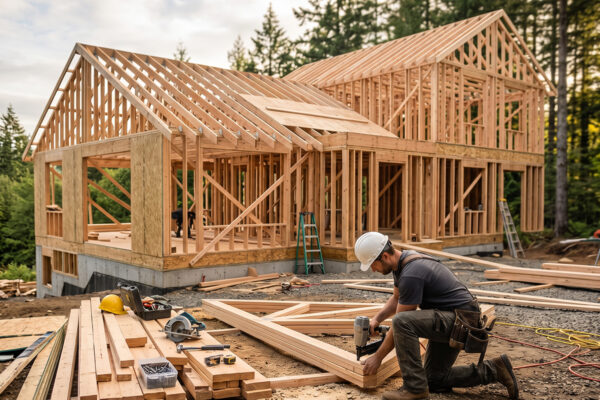
- Build: The construction phase spans foundation to framing, roofing, and interior finishes. Duration varies based on scope, complexity, weather, and material availability. JayMarc typically runs construction over 11 to 14 months depending on the size and features of the home.
Tip: When planning your home’s design, think ahead. If you are considering a home office, a multigenerational suite, or additional garage space, building for those needs from the start is far less expensive than adding them later.
How to Keep Your Custom Home Build on Schedule
Building a custom home is a collaborative process, and the homeowner’s role matters more than most people expect. Here are 5 ways you can help keep your project on track.
- Availability: Being consistently present at every step of the process is crucial. Your involvement ensures that your vision is accurately translated into reality.
- Communication: Maintain regular contact with your company representative. This way, you’re always in the loop and can make timely decisions or provide necessary feedback.
- Updates and Clarity: Expect and ask for regular updates on the progress of your home. Clear communication from both sides prevents misunderstandings and keeps the project on track.
- Decision Making: Take the time to consider all options available to you. Once you finalize your choices, particularly in design, it’s important to adhere to them. Frequent changes can delay the project and add to your costs.
- Timeline Adherence: Prompt decisions and responses play a key role in keeping the project on schedule. By meeting your responsibilities in a timely manner, you help make sure the build is completed as planned.
UNDERSTANDING EACH PHASE OF THE CUSTOM HOME BUILDING PROCESS
Building a custom home involves several important phases, from early planning and design to construction and move-in. At JayMarc Custom Homes, our integrated team works together throughout the process to help you navigate decisions, understand what comes next, and keep your project moving forward.
The table below outlines the key stages of our custom homebuilding process. While every project is unique, understanding these steps can help you plan with greater confidence. Timelines vary based on your property, design complexity, and local permitting requirements, particularly across Seattle’s Eastside communities.
| Phase | What to Expect |
| Discovery + Property Evaluation | Discuss your goals, budget, and desired timeline. If you haven’t purchased land, explore potential properties and evaluate their suitability for your future home. |
| Preconstruction: Planning + Feasibility | Evaluate site conditions, establish project priorities, and begin developing the design and budget. |
| Preconstruction: Architecture + Interior Design | Refine your floor plan, architectural details, materials, and finishes with guidance from JayMarc’s integrated team. |
| Preconstruction: Engineering, Pricing + Permitting | Coordinate engineering, evaluate construction costs, prepare required documentation, and navigate permitting approvals. |
| Construction | Bring your home to life through site preparation, foundation, framing, mechanical systems, exterior work, and interior finishes. |
| Completion + Move-In | Complete final inspections, conduct your homeowner walkthrough, and prepare for move-in. |
| Warranty + Customer Care | Receive ongoing support from JayMarc’s Customer Care team after moving into your new home. |
How long should you plan for? At JayMarc Custom Homes, we recommend allowing at least 24 months from signing your Preconstruction Agreement through move-in, including preconstruction and construction. Our Streamlined Path generally offers the quickest process, while Fully Custom projects may take longer depending on design complexity, site conditions, and permitting. Your team will develop a project-specific schedule as plans take shape.
What Should I Do If the Timeline for My Custom Home is Delayed?
Dealing with delays in custom home construction can be challenging, but a thoughtful approach helps you navigate setbacks effectively. On Seattle’s Eastside, where permitting timelines, site conditions, and seasonal weather can all introduce variability, having a contingency plan in place before you need it is especially important. That means securing temporary housing options or retaining the flexibility to extend your current lease if the schedule shifts.
Maintaining open communication with your builder is likewise a good idea. Address any concerns or questions promptly to prevent minor issues from becoming major problems. Establish a schedule for regular updates and discussions, keeping you in the loop and enabling you to make timely decisions.
Staying organized throughout the process is equally important. Keep detailed records of all communications with your builder to maintain clarity and avoid misunderstandings. But also be prepared to adjust your budget and timeline if necessary, particularly if your custom home project involves any complex permitting issues that are commonly experienced when building on the Eastside, such as critical area reviews in Sammamish or shoreline designations in Kirkland and Mercer Island. Remember to leave wiggle room in your budget and timelines to account for any extra expenses or changes to the planned construction schedule.
An even better bet? Work with a builder who already knows these local variables and plans around them from the start. JayMarc has navigated Eastside permitting, terrain challenges, and Pacific Northwest weather delays across more than 300 homes. That experience does not eliminate every delay, but it does mean our builds experience far fewer surprises.
Build Your Custom Home on Seattle’s Eastside with JayMarc Custom Homes
If you are considering building a custom home on Seattle’s Eastside and want to understand what the timeline looks like for your specific situation, JayMarc Custom Homes can help.
With more than 15 years of experience and over 300 homes built across Bellevue, Kirkland, Mercer Island, Issaquah, Redmond, Sammamish, Medina, Woodinville, and Renton, we know what it takes to deliver a luxury custom home on schedule in this challenging market.
Remember, every custom home JayMarc Custom Homes builds is unique, and timelines can vary. However, our award-winning approach and numerous positive reviews (80+ across Houzz, Facebook, and Google) testify to our ability to deliver your luxury home within a realistic timeframe.
Don’t just dream about your perfect home; let’s make it a reality. Contact us today to get started.
Frequently Asked Questions
At JayMarc Custom Homes, we recommend planning for a minimum of 24 months from signing your Preconstruction Agreement to move-in. This includes both preconstruction, which covers architectural design, interior selections, engineering, budgeting, and permitting, and the construction of your home.
Your timeline will depend on factors such as property conditions, design complexity, and local permitting requirements. Our Streamlined Path generally offers the quickest process by starting with proven floor plans and a curated design experience. Our Fully Custom Path offers greater architectural freedom and may require additional time.
Every project is unique, and our team will help establish a realistic schedule based on your goals, property, and chosen building path.
Yes. JayMarc’s recommended minimum 24-month timeline includes both preconstruction and construction, beginning when you sign your Preconstruction Agreement and continuing through move-in.
Preconstruction includes architectural and interior design, engineering, budgeting, permitting, and preparation for construction. These activities often overlap, and their duration depends on your property’s characteristics, the complexity of your design, and the requirements of your local jurisdiction.
It’s important to distinguish the full custom homebuilding timeline from the construction phase alone. The time spent physically building your home is only one part of the process. Planning for the complete journey helps you make informed decisions and set realistic expectations.
The length of preconstruction varies depending on your property, design goals, permitting requirements, and the level of customization involved. Rather than assigning a fixed timeline to this phase, JayMarc develops a project-specific schedule that accounts for the work needed before construction can begin.
Preconstruction brings together site evaluation, architectural and interior design, engineering, material selections, budgeting, and permitting. Our integrated team coordinates these activities, helping you understand how decisions affect your home’s design, cost, and schedule.
This is an important investment in the success of your home. Thoughtful planning helps identify potential challenges early, align your design with your budget, and prepare for a more predictable construction experience.
The most common sources of delay fall into a few categories.
Permitting is the factor buyers most frequently underestimate. On Seattle’s Eastside, permit timelines vary significantly by city. Projects with critical area designations, such as wetland buffers or steep slope overlays common in Issaquah, Sammamish, and parts of Kirkland, may require additional environmental review that adds months to the process.
Late design decisions or change orders are another major factor. When a homeowner changes a structural element, a floor plan detail, or a major finish selection after construction has begun, it can require rework and push the schedule back further than the change itself would suggest.
Site conditions also play a meaningful role on the Eastside. Steep lots, challenging soils, and limited access points require more extensive sitework and can extend the early phases of construction. Knowing these conditions before you purchase a lot, rather than discovering them after, is one of the most valuable things an experienced builder can offer.
Weather is an ongoing factor in the Pacific Northwest. Extended rain during the October through April window affects site work and can delay framing and foundation schedules. Builders who plan for this in advance minimize its impact on the overall timeline.
To a meaningful degree, yes. The factors most within a homeowner’s control are decision-making speed and stability. Buyers who arrive at design meetings prepared, respond promptly to their builder’s questions, and avoid late-stage changes to finalized plans consistently see their projects move faster than those who treat decisions as open-ended throughout construction.
Purchasing land that has already been evaluated for buildability also removes a significant source of early delay. Lots with straightforward topography, clear utility access, and no critical area complications start the permitting process from a more favorable position.
On the builder’s side, JayMarc’s integrated design-build model eliminates the coordination delays that commonly arise when architecture, design, and construction are handled by separate firms. When the same team manages every phase, handoffs are smoother and the schedule is easier to protect.
Every city on Seattle’s Eastside operates its own permitting process, and the variation between jurisdictions is significant enough to materially affect your build schedule.
Bellevue has one of the more structured permitting environments in the region, with clear submission requirements and defined review windows. Straightforward projects can move through permit review in three to five months. Projects on constrained or sensitive sites take longer.
Kirkland’s permitting timelines are broadly similar to Bellevue’s for standard projects, but properties near Lake Washington or with shoreline designations are subject to additional review that can extend the timeline considerably.
Sammamish has a large proportion of lots with critical area designations, including wetland buffers and steep slope overlays. These lots require geotechnical reports, environmental studies, and in some cases, additional agency review beyond the city’s own process. A project on a Sammamish lot with significant critical area constraints may take nine to twelve months to permit.
JayMarc has a dedicated permitting team that manages submissions across all of the Eastside’s jurisdictions (Bellevue, Kirkland, Mercer Island, Issaquah, Redmond, Sammamish, Medina, Woodinville, and Renton). We know the process, we know the reviewers, and we work proactively to keep permit reviews moving. For buyers in the planning stage, understanding the permitting environment for your specific lot and city is one of the most useful things we can clarify early in the process.
Yes. Production builders typically work with established floor plans, predetermined selections, and standardized construction processes. Because many design decisions have already been made, their projects can often move through planning and construction more quickly.
Custom homebuilding involves a more personalized approach. Your property’s characteristics, architectural preferences, lifestyle needs, and design selections all influence the planning and construction process. This additional coordination takes time, but it also creates opportunities to design a home around the way you live.
At JayMarc, our Streamlined Path offers a more efficient approach to custom homebuilding by combining proven floor plans with curated design options and a guided process. For homeowners seeking greater architectural flexibility, our Fully Custom Path provides a more personalized design experience.
We recommend planning for a minimum of 24 months from signing your Preconstruction Agreement through move-in, with the actual timeline depending on your project.
Several elements of JayMarc’s process are specifically designed to protect the build schedule.
The integrated design-build model is the most significant. Because JayMarc’s architects, designers, and builders work under one roof, there is no handoff gap between the design and construction phases. Plans are reviewed for constructability as they are developed, which means fewer surprises when construction begins.
Our dedicated permitting team manages all submissions and tracks review status across every Eastside jurisdiction we build in. We know the timelines, we know the requirements, and we follow up proactively so that permit delays do not catch anyone off guard.
We also work to keep homeowners ahead of their decisions. Custom homebuilding involves hundreds of choices, and when selections or approvals are delayed, it affects downstream scheduling. We map out the decision timeline early and flag upcoming choices well in advance so that nothing becomes a bottleneck.
Not necessarily, and in some cases it can actually add time. This is a question worth examining carefully before assuming that an existing structure on a lot represents a shortcut.
The appeal of a teardown is understandable. The lot already has utilities, a driveway, and a known address. But demolition itself requires a separate permit, and in some Eastside cities, that process adds a meaningful step before you can even begin the design and permitting work for your new home.
In higher-value markets like Medina, Mercer Island, and parts of Bellevue, teardown lots are common precisely because they sit in established neighborhoods where vacant land is rarely available. The permitting process in these jurisdictions is well-established, but it is also thorough. Demolition permits, haul-away coordination, and utility disconnection all add lead time that buyers do not always anticipate.
There is also the question of what the existing structure reveals about the lot itself. Older homes sometimes sit on lots with undocumented conditions, whether soil issues that were never formally assessed, drainage patterns that only become apparent after the structure is removed, or encroachments that were tolerated for decades and become visible again once the site is cleared.
A teardown can be an excellent path to a lot in a neighborhood where vacant land is simply not available. But it should be evaluated on its actual merits, not on the assumption that an existing structure accelerates the process. JayMarc routinely helps buyers evaluate teardown opportunities, and we will give you an honest read on what the timeline and cost picture actually looks like for a specific property.
JayMarc builds 10-15 custom homes annually across Seattle’s Eastside. That volume is deliberate, and it has a direct bearing on what your build experience looks like.
Building at this scale means JayMarc maintains active, ongoing relationships with the trade partners, subcontractors, and material suppliers who keep projects moving. When a framing crew is needed, we are not competing for availability on the open market. When a permit reviewer has a question, we have a team member who knows the process and can respond quickly. When material lead times shift, we have the purchasing relationships to adapt.
At the same time, 10-15 homes per year means we are selective about the projects we take on. We are not trying to maximize build volume at the expense of the experience. Every family we work with receives dedicated project management and direct access to the team throughout the process.
If you are trying to assess whether a builder has the bandwidth for your project, the question to ask is not just how many homes they build, but whether that volume is supported by the team, the systems, and the trade relationships to deliver each one well. For JayMarc, the answer is yes.