

Article Updated September 28, 2026
Accessory Dwelling Units, or ADUs, are independent living spaces situated on the same property as an existing single-family residence. Commonly referred to as in-law suites or granny homes, getting approval to build an ADU in Washington State, and especially in the Seattle area, is now easier than ever thanks to sweeping changes to Washington housing law that took full effect in 2025.
“The number of new ADUs is rising sharply in Washington. In the Seattle area alone, the city issued 987 ADU permits in 2023, nearly four times the number issued in 2018, and ADUs are now being permitted at roughly twice the rate of new single-family homes. The state is in a growth period and ADUs are a way to meet the increased demand for housing.”
– Olivia Horine, Interior Designer, JayMarc Custom Homes
For Washington State and especially Seattle-area homeowners, ADUs are useful for generating additional income or creating a private space for loved ones. For communities and municipalities, they are an effective solution to address housing shortages, prevent urban sprawl, and promote more sustainable land use.
In this blog, we’ll discuss what ADUs are, why they’re seeing an increase in popularity in Washington State, and particularly in Seattle, what some new rules are regarding ADUs at both the state and local level, and explore their pros and cons.
What are Accessory Dwelling Units?
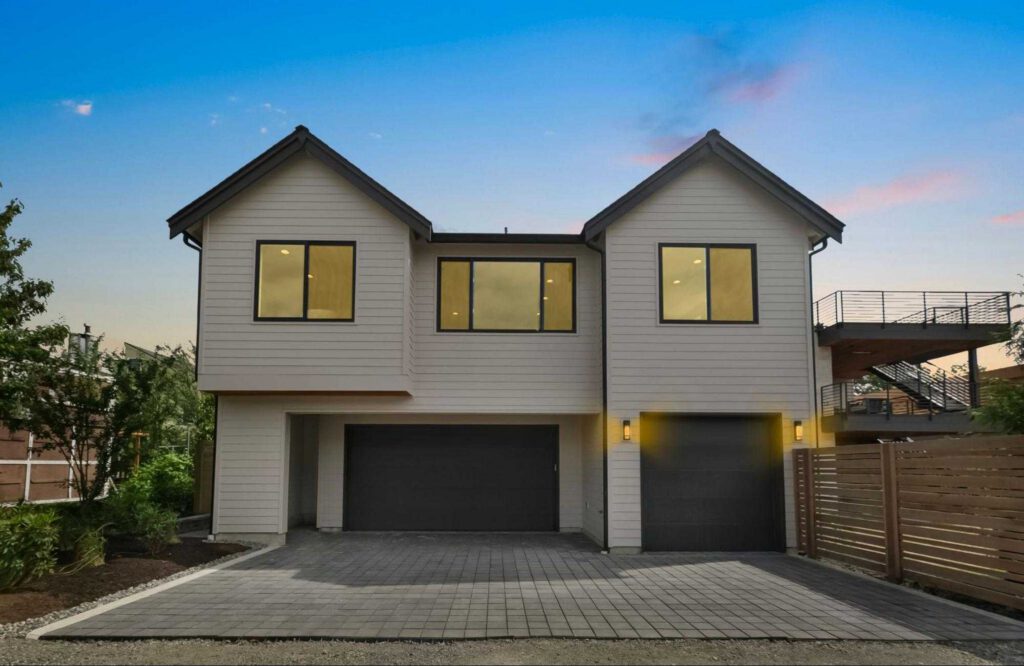
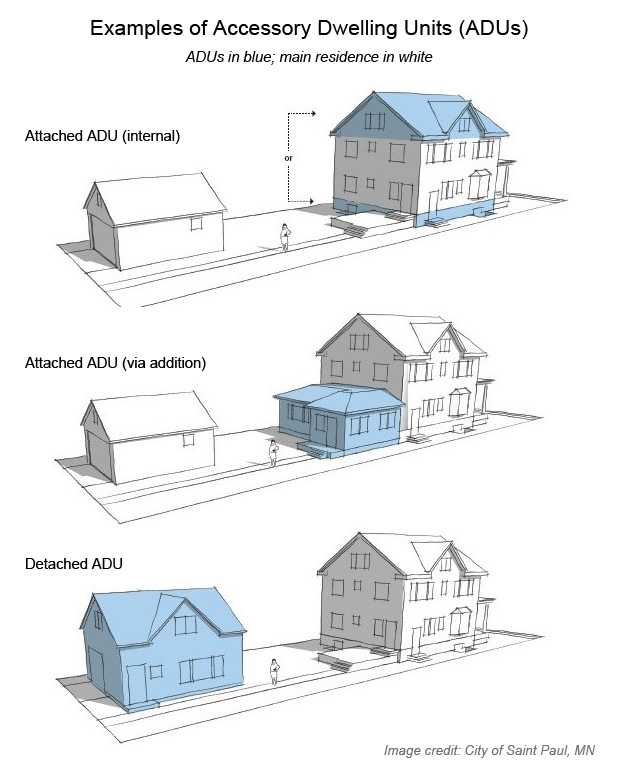
Accessory Dwelling Units are smaller, independent living spaces located on the same property as a single-family home. These units can be detached structures, converted garages, or even a section of the main house designed for separate living. ADUs offer flexibility for homeowners, providing additional space for family or rental income.
ADUs come in various forms, including:
- Detached ADU: A standalone structure separate from the main house.
- Attached ADU: Built as an extension or conversion of the main home.
- Garage conversion: A renovated garage turned into a livable unit.
Why Are ADU Numbers in Washington State & Seattle Increasing?
ADU permits in Seattle increased sharply after the city’s 2019 reforms, and that growth has continued: by 2023, Seattle issued 987 ADU permits, nearly four times the 246 issued in 2018, and builders are now constructing ADUs at roughly twice the rate of new single-family homes citywide. This trend is driven by three key factors: the growing demand for housing, the state’s landmark 2023 ADU legislation (House Bill 1337), and a wave of local code updates across Seattle and the Eastside that took effect through 2025 to comply with it.
The Washington Housing Crunch
More than 8 million people call Washington State home and the population is expected to continue increasing in the coming years. Nowhere is that pressure more visible than in the Seattle area and across the Eastside communities JayMarc builds in, including Bellevue, Kirkland, Redmond, Issaquah, Sammamish, Mercer Island, Medina, Woodinville, and Renton.
A recent study by the Building Industry Association of Washington (BIAW) revealed that Washington “needs at least 251,894 new housing units to meet demand for housing.”
ADUs are helping to address this housing shortage by making better use of existing properties. They allow homeowners to add living space without needing to wait for large developments to be built.
Additionally, ADUs can provide more affordable housing options while giving homeowners the chance to earn extra income or create space for family members. As demand for housing grows across Seattle and the Eastside, ADUs are becoming an important part of the solution.
ADU-Positive Policies
Recent policy changes brought forth with HB 1337 in June 2023 are making it easier for homeowners to build ADUs. Local governments are adhering to the new policies and are relaxing zoning laws, parking requirements, and speeding up ADU approval processes. This is making ADU projects more accessible than ever.
These ADU-friendly policies aim to encourage property owners to add more housing options, which helps ease the state’s housing shortage and affordable housing crisis. By simplifying the rules, Washington is fostering a more flexible approach to meeting housing needs, making ADUs a popular choice for many homeowners.
New ADU Rules in Washington State: Key Points to Know
The new Washington State ADU laws apply to all jurisdictions experiencing urban growth, as outlined by the Growth Management Act (GMA), which serves to ensure growth is managed appropriately.
The following key points are not a comprehensive list of the new laws, to review them in full, we suggest beginning with this guideline.
Minimum Number of ADUs Per Lot
Every lot in a GMA urban growth area must allow at least two ADUs in addition to the primary residence. Homeowners can build either attached, detached, or a combination of both types of ADUs. Additionally, converting existing structures, such as garages, into ADUs must be permitted.
Maximum ADU Size
How big can an ADU be in Washington state? Local governments cannot set ADU size limit maximums lower than 1,000 square feet. This allows homeowners to build larger, more practical ADUs that can serve as functional living spaces for family members or renters.
Relaxed Dimensional Standards
ADUs must follow the same dimensional standards as the principal home. This means local governments cannot impose more restrictive setback requirements, yard coverage limits, tree retention mandates, or door location restrictions than those required for the main house.
Street Improvements Not Required
Local governments can no longer require homeowners to make street improvements, such as road widening or adding sidewalks, as a condition for permitting ADUs. This change significantly reduces the cost and complexity of ADU construction.
Owner-Occupancy Requirements Removed
One of the biggest barriers to ADU construction was the owner-occupancy requirement. Under the new rules, local governments cannot require the property owner to live on-site. This provides more flexibility for renting both the primary residence and the ADU.
Condominium Sales
Local governments cannot prohibit the sale of an ADU as a condominium unit. This means homeowners can sell an ADU separately from the main house, offering more flexibility for homeowners and potential buyers.
Design Review Restrictions
Local governments cannot impose stricter aesthetic or design standards for ADUs than those required for the main house. This makes the design approval process simpler and more predictable for homeowners and developers.
Build an ADU into Your Custom Home Journey!Book a new home consultation and explore your options.Get Started |
Reduced Parking Requirements
ADU projects within half a mile of major transit stops are exempt from on-site parking requirements. For other areas, there are limitations on how much parking local governments can require, especially for smaller lots.
Impact Fees Capped
The impact fees charged for ADUs must now be capped at 50% of the fees assessed for the primary residence. This lowers the overall cost of building an ADU and encourages more homeowners to consider this option.
Common Interest Communities
New subdivisions or homeowner associations (Common Interest Communities) can no longer adopt rules (often called covenants, conditions, and restrictions or CC&Rs) that prohibit the construction of ADUs on any lot. However, existing CC&Rs remain in effect and are not impacted by the new law.
New ADU Rules in Seattle & Surrounding Markets
While House Bill 1337 set the statewide floor, every city implementing it has done so a little differently, and several cities across the Seattle area updated their local ADU codes as recently as mid-2025 to comply. Here’s what’s changed in some of the markets JayMarc builds in:
Seattle: The City Council adopted Ordinance 127211 in May 2025 to bring Seattle’s ADU code into compliance with HB 1337, alongside a companion ordinance updating Neighborhood Residential zoning to allow middle housing citywide. Both took effect June 30, 2025. Seattle now permits up to two ADUs per qualifying lot in all residential zones, with more design flexibility and no street improvement requirement. Seattle also offers a Pre-Approved DADU Plans program, which can meaningfully shorten permit review timelines for homeowners who use one of the city’s pre-approved designs.
Bellevue: Historically, Bellevue only allowed attached ADUs. That changed on June 24, 2025, when the city adopted middle-housing code updates to comply with the state mandate, opening the door to detached ADUs (DADUs) for the first time. Bellevue is also actively developing its own pre-approved DADU plans program.
Kirkland: Kirkland offers a Pre-Approved Detached ADU Plans program, allowing homeowners to select from designs that have already been reviewed for code compliance, which can meaningfully speed up permitting compared to a fully custom ADU design.
Renton: Renton’s City Council adopted its HB 1337 compliance updates on June 24, 2025, the same day as Bellevue. Renton also offers its own Permit Ready ADU (PRADU) Program, which provides free ADU base plans to residential property owners.
Redmond, Issaquah, Sammamish, Mercer Island, Medina, and Woodinville: As GMA-planning jurisdictions, each of these cities was also required to update its ADU regulations to comply with HB 1337 by the June 30, 2025 statewide deadline. Local implementation and pre-approved plan availability varies by city, so if you’re considering an ADU on a specific Eastside lot, it’s worth confirming the current rules for that jurisdiction before finalizing your plans.
Because these local rules are still evolving, working with an ADU builder who tracks the specifics city by city, rather than relying on the state-level basics alone, can meaningfully shorten your path from concept to permit.
Is an Accessory Dwelling Unit in Washington State Right For You? Pros and Cons to Consider
Adding an ADU to your property can be a great way to maximize space and boost property value. However, like any home improvement project, there are important factors to weigh before moving forward, and some of those factors depend on where your property is located. Rules, incentives, and permitting timelines can vary meaningfully between Eastside cities. Bellevue’s newly opened door to detached ADUs, Kirkland and Renton’s pre-approved plan programs, and Seattle’s streamlined permitting process each create a slightly different opportunity depending on where you’re building. Below, we outline the key pros and cons to help you decide if building an ADU in Bellevue, Kirkland, Redmond, Issaquah, Sammamish, Mercer Island, Medina, Woodinville, Renton, or elsewhere on Seattle’s Eastside is the right choice for your needs.
Pros of Adding an ADU to Your Property
1. Flexible Living Arrangements
Whether for aging parents, adult children, or long-term guests, ADUs offer a private, independent living space while keeping family close. They’re also great for creating home offices or studio spaces.
2. Potential Rental Income
ADUs can provide an additional stream of income through short- or long-term rentals. With no owner-occupancy requirement, homeowners can rent out the ADU or the main house for extra cash flow.
3. Increased Property Value
By adding an ADU to your property, you increase the home’s overall market value. Buyers often find homes with ADUs more attractive because of the rental or extra living space potential.
| Fun fact: Homes in Seattle with an ADU often see their property values increase 15% – 20%. |
4. Cost Savings on New Construction
Building an ADU as part of new home construction can be more cost-effective than adding one later. Incorporating an ADU from the start allows for shared utility setups, foundation work, and construction timelines.
5. Sustainable and Efficient Land Use
ADUs are a great way to make the most of your property without having to expand into new areas. They provide housing solutions within existing neighborhoods, reducing the need for sprawl and helping communities grow sustainably.
Cons of Adding an ADU to Your Property
1. Upfront Construction Costs
While integrating an ADU during new home construction can save costs, the upfront expenses for building an ADU are still significant. Costs include materials, labor, permits, and any additional utility setup, which can add up quickly.
2. Space and Design Constraints
Adding an ADU to an existing home may be limited by your property’s available space. Depending on lot size, setback requirements, and design preferences, you may not have as much flexibility as you would with new construction.
3. Utility and Infrastructure Challenges
Utility connections, such as water, sewer, and electricity, can be complex and costly, especially for existing properties. Coordinating these during a new construction project can simplify the process, but it remains a key consideration.
4. Potential Impact on Privacy
Building an ADU on your property, whether attached or detached, could affect your personal privacy or outdoor space. Consider the layout and placement to ensure it meets your needs without compromising your enjoyment of the main home.
5. Ongoing Maintenance and Management
If you choose to rent your ADU, you’ll need to handle tenant management, maintenance, and repairs. This can be especially demanding for homeowners who aren’t familiar with managing rental properties.
6. Zoning and Neighborhood Restrictions
Although the 2024 and 2025 law changes have relaxed many rules, zoning laws and neighborhood restrictions still apply, especially in older neighborhoods or in areas with homeowner associations (HOAs). Be sure to review local regulations before moving forward.
Curious About a New Construction Home with an ADU?
If you’re considering building a new home in the Seattle area and want to learn how to incorporate an ADU, JayMarc Homes is here to help. We’re a luxury home builder serving the Pacific Northwest for more than a decade, and as an experienced ADU builder and ADU contractor across Seattle’s Eastside, we know how to make an ADU just right, from initial ADU construction planning through final permitting.
Ready to explore your options?
Contact JayMarc Homes today and start planning your custom home with the perfect ADU for you.
Common Questions About Building an ADU
An Accessory Dwelling Unit (ADU) is a smaller, independent living space located on the same lot as a single-family home. ADUs include kitchen and bathroom facilities and can be attached to the main house, fully detached, or created by converting an existing garage.
Under Washington’s statewide rules, local governments cannot set an ADU size maximum lower than 1,000 square feet, though many cities allow larger units. There’s no statewide minimum size, but local building and health codes still apply. Requirements can vary by city, so it’s worth confirming the specifics for your property before finalizing a design.
In most cases, no. ADU projects located within a half mile of a major transit stop are exempt from on-site parking requirements under state law. Outside of that radius, cities can require some parking, but the amount they can require is capped, especially for smaller lots.
In many jurisdictions, yes. State law removed the ability for local governments to prohibit selling an ADU as a separate condominium unit, and Seattle’s recent code updates specifically include provisions for this. Availability and process can vary by city, so confirm the specifics with your builder or local planning department.
Possibly, but they’re capped. State law limits ADU impact fees to no more than 50% of what’s charged for the primary residence, which meaningfully lowers the overall cost compared to older rules.
Local governments can’t impose stricter design or aesthetic standards on an ADU than they require for the main house, which simplifies the design approval process compared to older, more restrictive local codes.
Adding an ADU typically increases your property’s assessed value, since it adds usable square footage and, often, rental income potential. The exact impact depends on your county assessor and the specifics of your project, so it’s worth budgeting for some increase in property taxes alongside the added value and income potential.
Yes. Seattle, Kirkland, and Renton all currently offer pre-approved ADU or DADU plan programs, letting homeowners choose from designs that have already been reviewed for code compliance to shorten the permitting timeline. Bellevue is also actively developing its own pre-approved DADU plans program following its 2025 code update. Availability varies by city, so it’s worth checking current programs for your specific location.
No. Washington’s 2023 reforms removed owner-occupancy requirements statewide, so you’re no longer required to live in either the primary home or the ADU to build or rent one out.
Timelines vary by jurisdiction and whether you use a pre-approved plan. Using a pre-approved DADU design in a city like Seattle can meaningfully shorten the standard review timeline compared to a fully custom design. Working with a builder who has an established relationship with your city’s permitting office is one of the best ways to keep this timeline predictable.
Cost depends heavily on size, whether it’s attached or detached, site conditions, and finish level. Building an ADU alongside new home construction is typically more cost-effective than adding one later, since it allows for shared utility work, foundation work, and construction timelines. JayMarc can provide a project-specific estimate once your lot and goals are reviewed.
An ADU must include its own kitchen and bathroom facilities to qualify as a legal dwelling unit. Depending on the jurisdiction and whether the ADU is attached or detached, utility connections may be shared with the main home or run separately. Your builder and local permitting office can confirm what’s required for your specific property.
Yes, garage conversions are one of the most common ADU types. They typically involve less new construction than a fully detached unit, though the existing structure’s condition, foundation, and utility access all factor into feasibility and cost.
Washington doesn’t currently offer a broad property tax exemption specifically for ADU construction, though some counties and cities have explored incentive programs for affordable or income-restricted ADUs. It’s worth checking current programs in your specific city, since these details change relatively often.
In many cases, yes, though short-term rental rules vary by city and are separate from ADU zoning rules. Seattle, for example, requires short-term rental operators to obtain a business license and register the unit, regardless of whether it’s an ADU. Confirm your specific city’s short-term rental licensing requirements before planning to use an ADU this way.
Building an ADU alongside new home construction is typically more cost-effective, since it allows you to share foundation work, utility connections, and construction scheduling rather than mobilizing a second project later. That said, adding an ADU afterward is a common and viable path if your budget or plans evolve over time.
Yes. Washington’s 2023 ADU law, House Bill 1337, set a statewide compliance deadline of June 30, 2025, by which every GMA-planning city and county had to update its local ADU regulations to meet the new minimum standards, including allowing two ADUs per qualifying lot, removing owner-occupancy requirements, and capping impact fees.
Yes, several cities across the Seattle area updated their ADU codes in 2025 to meet the state’s June 30 deadline. Seattle adopted its compliance ordinance in May 2025, with related zoning changes effective June 30, 2025. Bellevue and Renton both adopted their updates on June 24, 2025, with Bellevue’s update notably opening the door to detached ADUs for the first time. Because these changes are recent, it’s worth confirming the current rules for your specific city before finalizing ADU plans.