
The Question Every Family Asks First
If you’ve searched for the cost of building a custom home in Kirkland, you’ve probably found one of two things: a national cost calculator that knows nothing about Eastside lots, or a builder website that says “it depends” and leaves it there.
We get it. You’re planning one of the biggest investments of your life, and you deserve more than a shrug.
So here’s our promise for this article. We’ll tell you the minimum budget a custom home in Kirkland realistically requires, explain why nobody can responsibly give you a final number before studying your lot, and walk you through every factor that moves the total. By the end, you’ll know what questions to ask and what to expect, even before you talk to a builder.
The Short Answer: Plan for a Building Budget of At Least $1.5 Million
For a custom home in Kirkland, you’ll want a building budget of at least $1.5 million. That figure covers the home itself and does not include the cost of your land.
Why don’t we give you a final number? Because the factors that swing a Kirkland budget the most are hidden in the lot itself. Soil conditions, slopes, trees, utility connections, and zoning limits can each add (or save) a meaningful amount, and none of them are knowable until someone studies your specific property.
Here’s the thing: any builder who quotes you a firm price before evaluating your land is guessing. We’d rather tell you the truth up front than surprise you six months into construction. That’s why every JayMarc project starts with a land feasibility study, which we’ll explain below.
Why “Cost Per Square Foot” Can Lead You Astray
Cost per square foot is the number most people reach for first, and we understand why. It feels simple and comparable. The problem is that it only measures the house, not everything it takes to get the house onto your lot.
Picture two homes of identical size. One sits on a flat, cleared lot in Rose Hill with utilities already at the street. The other sits on a wooded, sloped lot in Finn Hill that needs a geotechnical study, retaining walls, and a new sewer connection. Same square footage, same finishes, and yet the second home can cost far more to build.
Think of per-square-foot pricing as a rough starting point for comparing finish levels. It’s not a budget, and it’s not something to plan your finances around.
The Five Parts of a Custom Home Budget
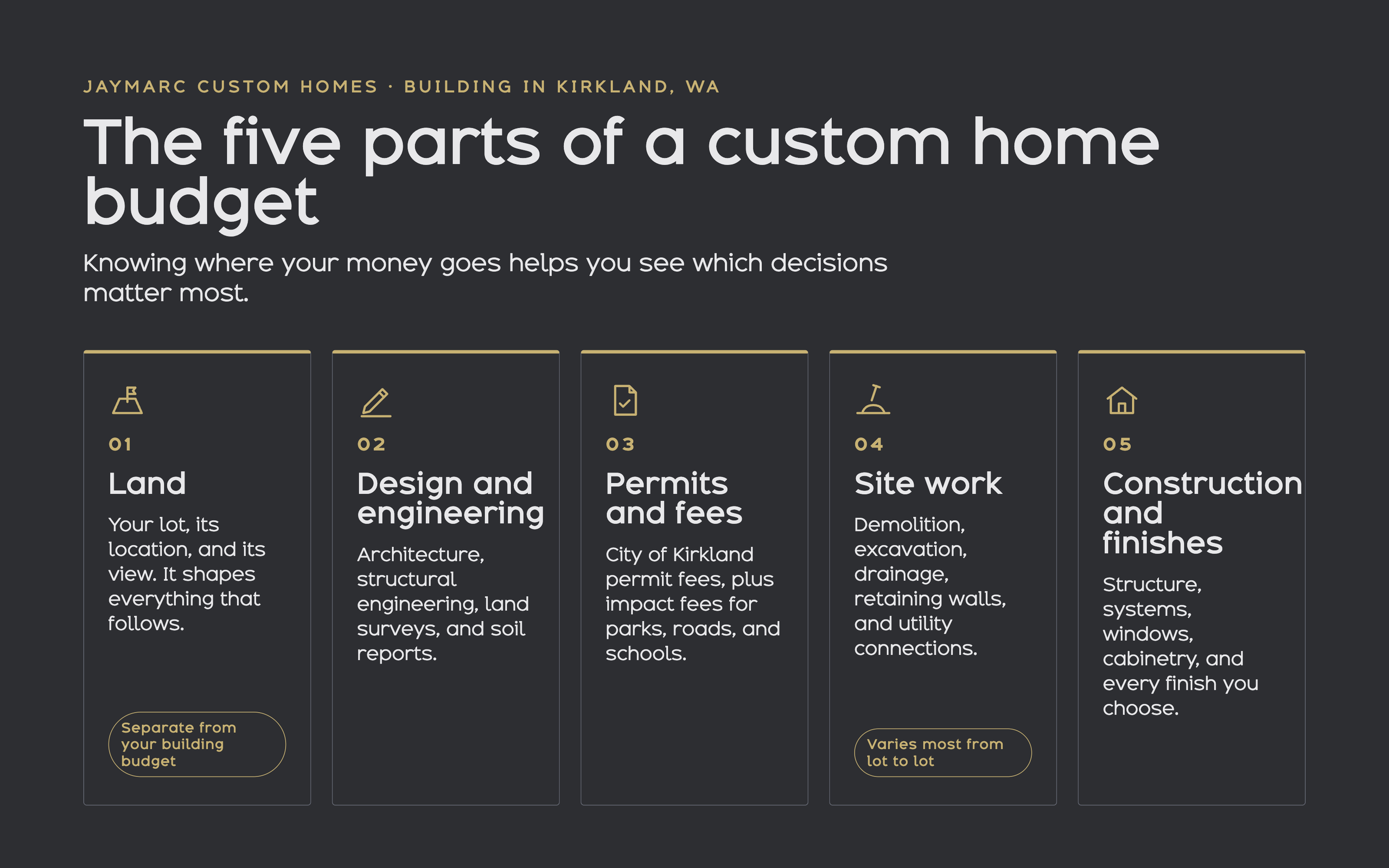
Every custom home budget breaks down into five parts. Understanding them helps you see where your money goes and which decisions matter most.
1. Land
Kirkland lot prices vary widely by neighborhood, view, and proximity to the lake. Your land is usually separate from your building budget, but it shapes everything that follows, from what you can build to how much site work it needs.
2. Design and Engineering
This includes architecture, structural engineering, land surveys, and geotechnical reports. When architecture, design, and construction happen under one roof (as they do at JayMarc), the design is priced and planned with real construction costs in mind from the first sketch, not after the drawings are finished.
3. Permits and Fees
The City of Kirkland charges building permit fees, and new homes typically owe impact fees that help fund parks, transportation, and schools. These are predictable once your design is set, but they’re real line items worth planning for.
4. Site Work
This is the part that surprises families most. Demolition of an existing home, excavation, drainage, retaining walls, and utility connections all live here. It’s also the part that varies most from lot to lot, and the main reason we can’t quote a total before studying your property.
5. Construction and Finishes
This is the home itself: structure, systems, windows, cabinetry, and every finish you select. Kitchens, windows, and flooring are where finish choices have the biggest impact on the budget. We help you put your budget where you’ll feel it every day.
What Makes Building in Kirkland Different
Kirkland is a wonderful place to build, but it comes with its own rules and realities. These local factors most often shape a budget here.
Teardown Lots
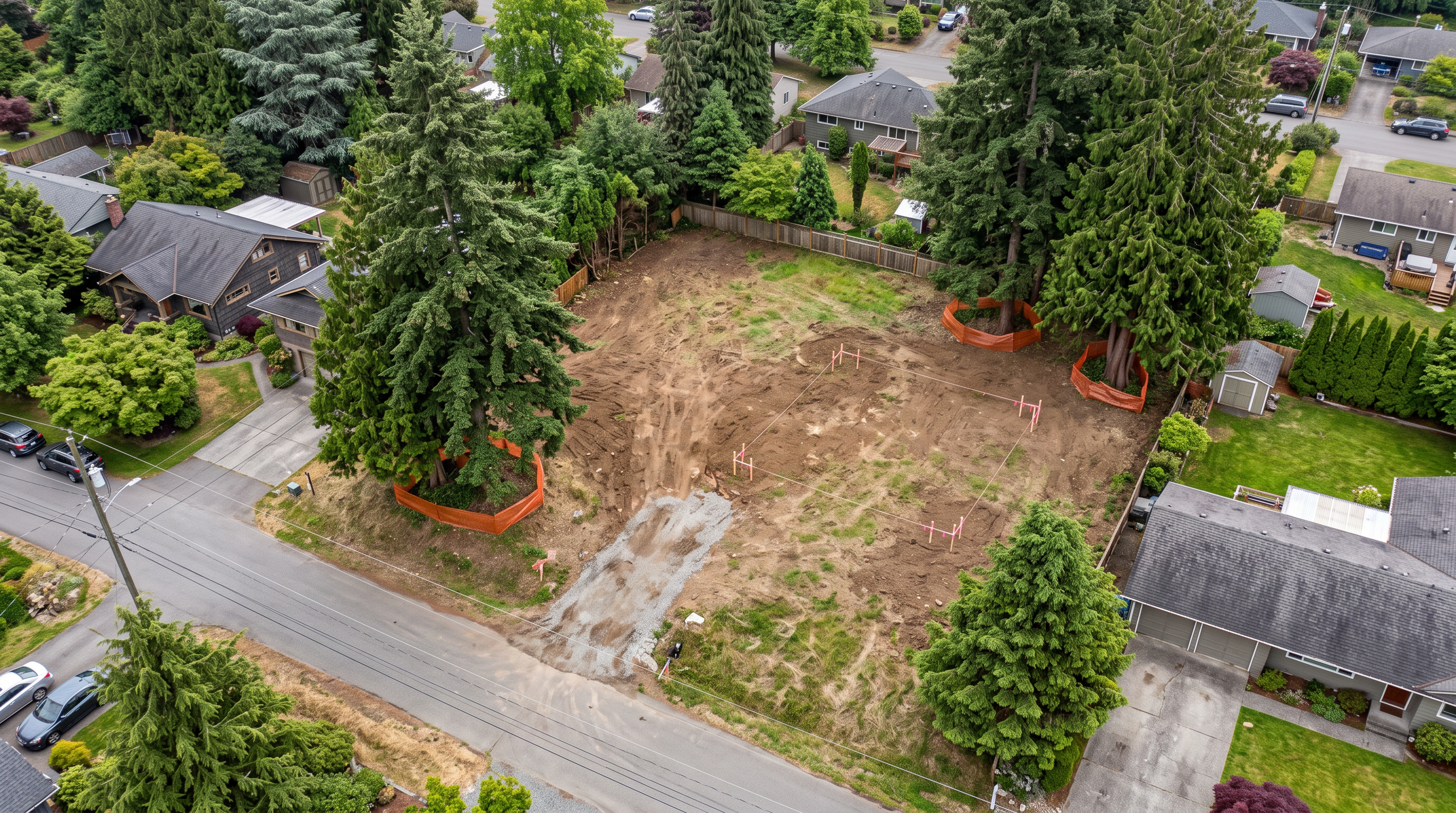
Many Kirkland custom homes start with an older house on a great lot in neighborhoods like Houghton, Lakeview, Bridle Trails, or Finn Hill. That means planning for demolition, surveys for hazardous materials common in older homes, and often upgrading utility connections that were sized for a much smaller house.
Tree Retention Requirements
Kirkland takes its tree canopy seriously. Depending on your lot, you may need an arborist report and a tree retention plan, and significant trees can affect where the home can sit on the property. Some removals require replacement planting. These rules can shape your design as much as your budget, which is why we review them before design begins.
How Much House Fits on Your Lot
Kirkland’s zoning code limits how much of your lot can be covered and how large the home can be relative to the lot size. In other words, a larger lot doesn’t automatically mean a larger house. Knowing these limits before you buy land can save you from paying for square footage you can’t build.
Slopes and Soils
Hillside lots in areas like the Highlands and Finn Hill often come with beautiful views and extra engineering. Geotechnical studies, specialized foundations, and retaining walls are common, and they belong in the budget from day one.
Lake Washington Waterfront
Waterfront lots fall under shoreline regulations that affect setbacks, what you can build near the water, and how long permitting takes. The reward is extraordinary, and the process takes patience and experience.
Utilities
Depending on your neighborhood, water and sewer service may come from different providers, each with its own connection requirements and fees. Some older lots also need new or upgraded connections. This is one of those details you’d never think to ask about (and exactly the kind we ask for you).
Why Land Feasibility Comes Before a Price
A land feasibility study is how we turn “it depends” into real answers. Before design begins, our team evaluates your lot (or the lot you’re considering) to understand what it will take to build there.
Here’s what that looks like:
- Zoning and buildable area: how large the home can be and where it can sit on the lot.
- Trees and environmental factors: which trees affect the design and what reports or permits are required.
- Soils and slopes: whether geotechnical work, special foundations, or retaining walls will be needed.
- Utilities: what connections exist, which providers serve the property, and what upgrades are required.
- Permitting path: what the City of Kirkland will require and how long review is likely to take.
What this means for you: you make decisions with full information. If you haven’t bought land yet, feasibility can tell you whether a lot fits your goals before you commit. That single step can save families from the most expensive surprise of all: discovering a lot can’t support the home they had in mind.
How Time Affects Your Budget
A custom home moves through several phases: land feasibility, design, permitting, construction, and move-in. Each one takes time, and time has its own cost.
Permitting is the phase families most often underestimate. While your plans are under review with the City of Kirkland, you may be carrying costs on your land, such as loan payments, taxes, and insurance. Projects with tree retention plans, steep slopes, or shoreline review generally take longer to approve.
The good news? Most permitting delays come from incomplete or inconsistent plans, and that’s exactly what an integrated team prevents. When the people designing your home also build it, the plans that go to the city are already coordinated, which keeps review moving.
Where Custom Home Budgets Go Off Track
Picture this: you’re six months into your build. Framing is up, and you can finally walk through the rooms you’ve been imagining for years. Then your builder calls. The excavation hit unexpected soil conditions, and the foundation needs redesigning. The number they share makes your stomach drop.
This happens more often than it should, and it’s almost always preventable. Here are the most common causes we see:
- Site surprises: soil, drainage, or utility issues that weren’t investigated before construction started.
- Allowances set too low: a budget that looked great on paper because finish allowances didn’t match what the family actually wanted.
- Late design changes: changes made after construction begins, when every adjustment affects work that’s already done.
- Disconnected teams: an architect, designer, and builder working separately, so costs aren’t checked against the design until it’s too late.
Our approach is built to prevent each of these. Land feasibility catches site issues early. Realistic allowances are set with you, based on what you actually want. Decisions are planned in a sequence that front-loads the big ones. And because architecture, design, and construction happen under one roof, your budget is part of every design conversation from the start.
Is Building in Kirkland Worth It Compared to Buying?
Let’s be honest: building custom isn’t the right choice for every family. Buying an existing home is faster and comes with fewer decisions. If timing is your top priority, or if you find a home that already fits how you live, buying may be the better path.
Building makes sense when you want something you can’t find on the market. That might be a layout designed around how your family actually lives, a home that takes full advantage of a specific lot or view, or the quality and energy performance of new construction rather than a remodel of someone else’s choices.
It’s also normal to feel uneasy about the size of this investment. Many families tell us they worry about making the wrong call or wanting something “extra” when an existing home would be fine. Those feelings are valid. They’re also exactly why having a guide who has done this many times before makes such a difference. You don’t have to become an expert in building codes. That’s our job.
You Don’t Have to Figure This Out Alone
The cost of a custom home in Kirkland isn’t a mystery. It’s a set of questions that can be answered, one lot and one decision at a time. Start with a realistic building budget of at least $1.5 million, learn what your land will require, and work with a team that puts your budget at the center of every design conversation.
If you’re thinking about building in Kirkland, we’d love to help you understand what’s possible. Whether you already own a lot or you’re still looking, a land feasibility conversation is a great first step.
Start With a Land Feasibility Conversation Join Our Next WebinarFrequently Asked Questions About How Much It Costs to Build a Custom Home in Kirkland, WA
Plan for a building budget of at least $1.5 million, not including land. Your final cost depends on your lot, which is why we start every project with a land feasibility study.
It depends on what you’re comparing. Buying is usually faster, while building gives you a home designed for your family and your lot. The right choice comes down to your priorities, timeline, and how much the details matter to you.
Review times vary with the City of Kirkland’s workload and your project’s complexity. Lots with tree retention plans, steep slopes, or shoreline review generally take longer. Well-coordinated plans are the best way to keep review moving.
Yes, and many Kirkland custom homes start this way. You’ll need a demolition permit, and older homes often require hazardous material surveys and utility upgrades. A feasibility study will show what’s involved for your specific property.
No. In fact, talking to a builder before you buy is one of the smartest moves you can make. A feasibility review can tell you whether a lot supports the home you want before you commit.