


Updated October 20, 2026
A well-maintained sprinkler system keeps your lawn and landscaping healthy, saves water, and helps you avoid costly repairs. The good news is that most of the work comes down to a few simple habits and two important seasonal tasks: starting the system up in spring and protecting it before winter.
In Western Washington, both seasons matter. Wet springs mean you often need less watering than you’d expect early on, dry summers mean your system works hardest in July and August, and freezing winter temperatures can crack pipes and valves if the system isn’t properly winterized. This guide walks you through what to do and when.
How Your Sprinkler System Works
Knowing the basic parts of your system makes maintenance and troubleshooting much easier. Most residential irrigation systems include:
- A rain or weather sensor on some systems, which pauses watering when it isn’t needed
- A water supply connection and shutoff valve that controls water to the entire irrigation system
- A backflow prevention assembly, which keeps irrigation water from flowing back into your home’s drinking water supply
- A controller (timer), usually located in the garage or on an exterior wall, which sets when and how long each zone runs
- Zone valves, typically housed in underground valve boxes, which open and close to send water to each area of your yard
- Sprinkler heads, including spray heads for smaller areas and rotors for larger lawn areas
- Drip irrigation lines in some landscapes, which deliver water directly to garden beds and shrubs
Spring Startup Checklist
In Western Washington, most homeowners turn their systems on in April or May, once the risk of hard freezes has passed and spring rain is no longer enough to keep plants watered.
Tip: If you plan to have a professional start-up or inspection, book the appointment in late winter. Irrigation companies get busy once spring arrives.
When you’re ready to start your system:
- Start with a light watering schedule and increase it gradually as temperatures rise.
- Inspect the controller. Check the time and date, review each zone’s program, and replace the backup battery if your controller has one.
- Walk the yard. Look for sprinkler heads damaged by mowers, foot traffic, or winter weather.
- Close any drain valves that were opened for winter.
- Open the main irrigation valve slowly. Opening it too quickly can send a pressure surge through the system and damage components.
- Run each zone manually. Watch for leaks, broken or clogged heads, low pressure, and spray hitting sidewalks, driveways, or the house.
- Adjust heads as needed so water lands on your lawn and plants, not on hard surfaces.
- Schedule your annual backflow test if your water provider requires one.
Routine Maintenance Through the Season
Keep Your Watering Schedule Up to Date
Your controller’s settings shouldn’t stay the same all season. Most lawns need about an inch of water per week during summer, including rainfall, but much less in spring and fall. Review your schedule every month or so, and water in the early morning to reduce evaporation. Instructions for adjusting your controller are usually inside the controller’s cover or in the manufacturer’s manual. For more on keeping your lawn healthy through the dry months, see our guide to prepping your lawn for summer.
Keep Sprinkler Heads Clear
Grass, shrubs, and groundcovers can grow over or around sprinkler heads and block the spray. Trim plants back regularly so each head can pop up fully and reach its intended area. Blocked heads can leave dry spots in one area while overwatering another.
Clean Clogged Sprinkler Heads
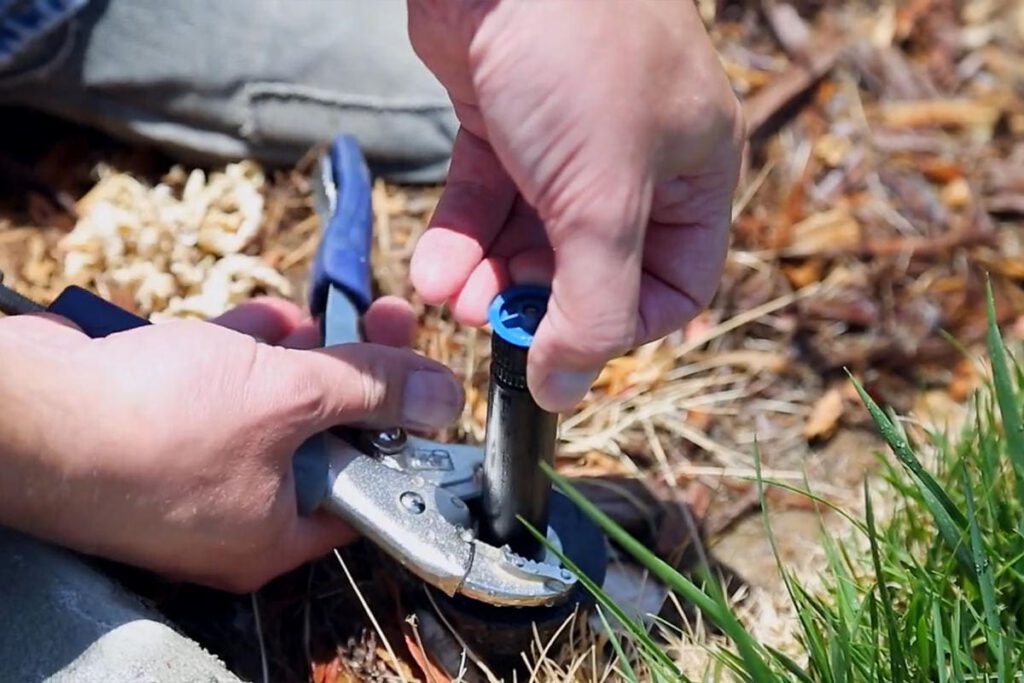
Over time, sediment and debris can clog sprinkler nozzles and filters, causing weak or uneven spray. Cleaning steps vary by manufacturer, so check your product’s instructions first. For most pop-up spray heads, the process looks like this:
- Turn off the zone at the controller.
- Pull up the riser, the part of the head that pops up, and hold it in place. Some manufacturers make a small tool for this. If you use pliers, wrap the riser in a cloth to avoid scratching it.
- Unscrew the nozzle from the top of the riser.
- Remove the filter screen beneath the nozzle.
- Rinse the nozzle and filter with clean water to remove debris.
- Flush the riser by briefly running the zone with the nozzle removed, if the manufacturer recommends it.
- Reinstall the filter and nozzle, then run the zone to confirm a full, even spray pattern.
If a head is cracked or still doesn’t spray properly after cleaning, it’s usually time to replace it.
Check Zone Coverage
Every few weeks, run each zone manually and watch it work. Look for dry spots, overlapping spray that creates soggy areas, and heads that are tilted, sunken, or misaligned. Small adjustments to a head’s direction or spray distance can make a big difference in how evenly your yard is watered.
Care for Drip Irrigation Zones
If your landscape includes drip irrigation, clean the filter for each drip zone periodically and check for clogged emitters, kinked or damaged tubing, and fittings that have come apart. Drip systems are easy to overlook because the water is delivered quietly at ground level, so a quick walk-through while they’re running helps catch problems early.
Fall Winterization Checklist
Winterizing is the most important maintenance task for sprinkler systems in our climate. Water left in pipes, valves, and sprinkler heads can freeze, expand, and cause cracks that won’t show up until you turn the system on in spring.
In Western Washington, plan to winterize before the first hard freeze, often between mid-October and early November.
- Turn off the controller, or set it to “off” or “rain” mode so it doesn’t try to run.
- Shut off the irrigation system’s water supply.
- Drain the system. Depending on how your system was designed, this may involve opening manual drain valves, relying on automatic drain valves, or blowing out the lines with compressed air. Leave blowing out lines to a professional.
- Protect the backflow assembly from freezing. It’s often exposed above ground, so follow your installer’s or tester’s recommendations, which may include draining it or adding an insulated cover.
- Note any repairs needed so they can be scheduled before spring.
When to Call a Professional
Many maintenance tasks are easy to handle yourself, but some are best left to an irrigation professional:
- Leaks in underground pipes or around valves
- Zone valve or wiring repairs
- Blowing out lines with compressed air
- Backflow testing, which must be done by a certified tester
- Redesigning zones or coverage for new landscaping
Calling a professional early often prevents a small problem from becoming a larger, more expensive repair.
A Healthy Yard Starts With a Well-Maintained System
A sprinkler system doesn’t require much attention, but a little care at the right times keeps it running efficiently for years. Start it up carefully in spring, keep an eye on it through the summer, and protect it before winter arrives, and your lawn and landscaping will be ready to thrive every season.
For more seasonal home care tips, explore our homeowner resources.
Frequently Asked Questions About Sprinkler System Maintenance
Most likely, yes. Irrigation systems connected to a public water supply use a backflow prevention assembly to keep irrigation water from flowing back into the drinking water system. In Washington, certified testers generally must test backflow assemblies when installed and at least once a year. Your water provider typically sends a reminder and tracks the results. Check with your provider for its specific requirements and deadlines.
Sometimes. If your system has manual or automatic drain valves, you may be able to shut off the water and drain the lines yourself by following the installer’s instructions. Systems that need to be blown out with compressed air are different. Too much pressure can damage pipes and sprinkler heads, and compressed air can be dangerous. For blowouts, hiring an irrigation professional is usually the safer choice.
Water left in the system can freeze during cold snaps, expand, and crack pipes, valves, sprinkler heads, and the backflow assembly. The damage often isn’t visible until spring, when you turn the system back on and leaks appear. Repairs can mean digging up broken lines or replacing components, which costs far more than winterizing. Even in mild winters, a single hard freeze can cause damage.
Adjust your schedule several times a year rather than leaving one setting all season. Water lightly in spring and fall, when rain and cooler temperatures do much of the work, and more in July and August, when Western Washington is typically driest. If water runs off before it soaks in, split each zone’s run time into shorter cycles with a break between them so the soil can absorb it.
Common signs include soggy spots that never dry out, water pooling around a sprinkler head or valve box, unusually green patches, a zone with weak or uneven spray, and a higher-than-usual water bill. To check, turn off all water use in and around the house and watch your water meter. If it keeps moving, you likely have a leak somewhere, and an irrigation professional can help you find it.
Start with the controller. Confirm the zone has a programmed run time, then try running it manually. If it still won’t start, common causes include a wiring problem, a failed valve solenoid, or debris inside the valve. If the zone runs when you activate it at the valve but not from the controller, the issue is likely electrical. An irrigation professional often handles valve and wiring repairs best.
A smart irrigation controller adjusts your watering schedule automatically using local weather data or on-site sensors. It waters less after rain or during cool weather and more during hot, dry stretches, and many models let you manage the system from your phone. Controllers labeled under the EPA’s WaterSense program meet efficiency criteria. Some local water utilities have offered rebates, so check with your provider before buying.
Sprinklers spray water over an area and work best for lawns. Drip irrigation delivers water slowly through tubing and small emitters directly to the base of plants, which makes it well suited to garden beds, shrubs, and containers. Because water goes right to the roots, less is lost to evaporation and runoff, which makes drip an efficient choice for planted areas.